Chinese Language: History, Types, Writing System & Useful Phrases
Table of Contents
- 1. What Language is Chinese?
- 2. How Many Chinese Languages Are There?
- 3. Regional Dialects in China
- 4. Fascinating Facts & History of the Chinese Language
- 5. How Many Characters, Words, and Alphabets Are in Chinese?
- 6. Basic Chinese Phrases for Beginners & Travelers
Is Chinese a language?
The Chinese language, encompassing over 80 languages and 30 writing systems, refers to the languages used by all 56 ethnic groups in China. That is not say that Chinese is not a single language but a fascinating family of languages and dialects. However, most of the time, when we talk about Chinese, we are referring to the language and characters of the Han ethnic group - the national common language of China, namely Mandarin.
Chinese is now one of the official languages of the United Nations and the United Nations World Tourism Organization. According to UNESCO statistics, approximately 1.6 billion people worldwide speak Chinese, underscoring its global significance as the language with the most native speakers.
Curious about the Chinese language? This article is a comprehensive guide for curious minds, international travelers, and potential learners. Keep reading, and you will also find some useful vocabulary and phrases for your trip to China

The languages of the 56 ethnic groups in China belong to five major language families: Sino-Tibetan, Altaic, Austronesian, South Asian, and Indo-European.
The Han ethnic Chinese language, which belongs to the Sino-Tibetan language family, has a standard form (Mandarin) and various dialects. The nine major dialects are the Northern dialect, Wu dialect, Xiang dialect, Gan dialect, Hakka dialect, Yue dialect, Min northern dialect, Min southern dialect, and Pehuian dialect.
Within each dialect area, there are several sub-dialects and numerous local dialects. Among them, the Northern dialect is the one with the largest number of speakers.
What Language Do Chinese People Speak?
Chinese, or Mandarin, is the most widely spoken language in China, accounting for 91.59% of the total population. It is also the language with the largest number of speakers in the world. It is used by the Chinese communities in countries such as Singapore, Malaysia, Japan, Myanmar, Thailand, the United States, Canada, Australia, and New Zealand.
Apart from the Han ethnicity using Chinese, the Hui and Manchu ethnic groups also mostly use or adapt Chinese. Other ethnic groups have their own languages, and many of them have partially adopted or used Chinese to varying degrees.
What Is the Chinese Language Called?
Wish to understand a bit or even learn Chinese language and culture? It is essential for you to first grasp the distinctions between “Chinese,” “Han language,” and “Mandarin.”
Chinese vs Mandarin Language vs Hanyu
Chinese (中文, Zhōngwén) is a general term with the broadest scope, encompassing all written and spoken forms of the language, particularly when emphasizing the written system.
Hanyu (汉语,Hànyǔ) focuses more on the language of the Han ethnic group itself, encompassing all regional dialects (such as Cantonese and Min Nan) and its standard form.
Mandarin (普通话, Putonghua) is the specific form of modern standard Chinese, serving as the officially promoted common language with legally defined standards for pronunciation, vocabulary, and grammar. Putonghua is used in Chinese people’s daily life, the media broadcasting , and the education system across China.
>> ETC’s Real China Tours to learn Chinese Language
How Many Chinese Languages Are There?
As mentioned earlier, Chinese languages encompass more than 80 languages and about 30 scripts used by 56 ethnic groups. Among them, 61 different Chinese languages, including Han, Miao, Zhuang, Tibetan, Uyghur, Mongolian, Manchu, Gaoshan, Qiang, Pumi, Dulong, Jingpo, Yi, Lisu, Hani, Lahu, Bai, Naxi, Jino, Nusu, Tujia, and Achang languages, among others, are considered the major languages in China.
However, according to Chinese language experts, several minority languages have completely lost their communicative functions, such as Manchu, She language, Hezhe language, and Tatar language. 20% of the languages are already endangered, such as Nu language, Gelao language, Pumi language, and Kinu language. Another 40% of Chinese languages have shown signs of endangerment or are on the verge of becoming endangered.
Regional Dialects in China
Although Mandarin is China's official language, seven major regional dialects are also spoken nationwide by local populations.
Northern Dialects
Also known as Guanhua, it is form the foundation of Mandarin, the modern Chinese lingua franca. Beijing Guanhua is spoken in the eastern North, represented by Beijing dialect; Lanzhou-Yinchuan Guanhua is found in the western North, represented by Lanzhou dialect; Southwest Guanhua is spoken in the southwestern region, represented by Sichuan dialect; and Jianghuai Guanhua is spoken in the Jianghuai region and along the lower Yangtze River, represented by Nanjing and Yangzhou dialects.
Despite subtle variations, these dialects exhibit strong mutual intelligibility. Basic communication remains effortless even between Harbin in northernmost China and Kunming in Yunnan.
Cantonese Dialect
The Cantonese dialect is also known as Cantonese. It originated from the ancient Central Plains Classical Language and is widely used in the central and western parts of Guangdong, the eastern part of Guangxi, Hong Kong, Macao, and among overseas Chinese communities.
>> Recommended 7 Days istoric Guangdong Tour
Wu dialect
Also known as Jiangdong dialect or Wu Yue language, it carries profound cultural heritage of China. Represented by Shanghainese and Suzhou dialects, Wu is spoken across Zhejiang, Shanghai, southern Jiangsu, southern Anhui, northeastern Jiangxi, and northern Fujian. Examined through linguistic characteristics and literary style, Wu dialects perfectly preserve the eight tones of ancient Chinese language, making them the authentic successor.
>> Recommended 5-day Shanghai / Suzhou / Tongli Tour Package
Min dialects
Min dialects are spoken in Fujian, Hainan, eastern Guangdong, Taiwan, and among overseas Chinese communities in the Philippines, Singapore, Malaysia, and elsewhere.
>> Recommended 10 days Southeast China Tour for Overseas Chinese
Xiang dialects
Xiang dialects, or Hunanese, are primarily concentrated in Hunan Province (where Changsha and Zhangjiajie are located) and its neighboring northwestern Guangxi Province.
Gan dialects
Commonly known as Jiangxi dialects, it originated during the Song Dynasty and retain the entering tones of Middle Chinese.
Hakka dialect
The Hakka dialect, represented by Meizhou dialect, is widely used in southern China, including eastern and northern Guangdong, the eastern shore of the Pearl River estuary, western Fujian, southern Jiangxi, southeastern Guangxi, Taiwan, and overseas in Malaysia, Indonesia, and other regions.
>> Recommended 3 Days In-depth Hakka Tulou Tour from Xiamen
Fascinating Facts & History of the Chinese Language
How Old Is the Chinese Language?
Chinese belongs to the Sino-Tibetan language family. The origin of the Sino-Tibetan languages remains undetermined. One theory suggests the Proto-Sino-Tibetan language originated in northern China, with a history of approximately 6,000 years. Another hypothesis posits that this language family emerged from present-day Sichuan in southwestern China, beginning to diverge around 10,000 years ago.
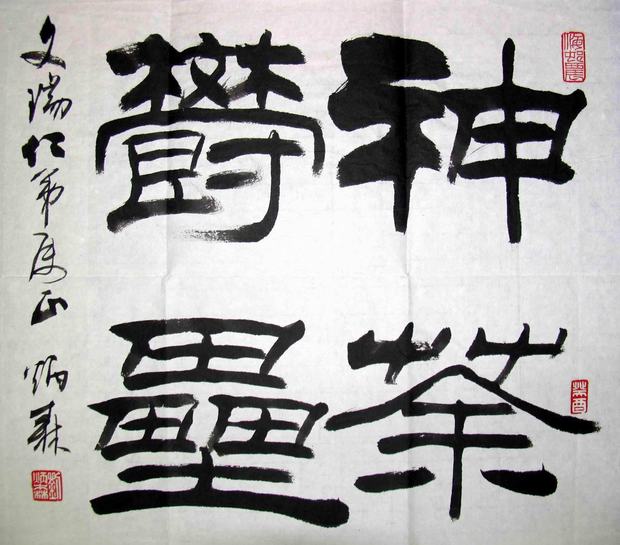
During the Zhou Dynasty, the emperor enfeoffed eight hundred feudal lords, yet “the people of the five regions spoke languages that were mutually unintelligible.” After the Qin Dynasty was established, it further standardized writing, adopting small seal script as the official written language.
From Classical Chinese to Modern Chinese, it evolved from classical texts to the Mandarin spoken today.
Writing in the Chinese Language
When it comes to learning Chinese, you not only need to be able to speak and read it, but also need to learn how to write Chinese language in Chinese.
Chinese Characters Explained: the Writing System
Chinese characters constitute the writing system of the Chinese language. It is one of the oldest writing systems in the world, with a history of several thousand years.
Chinese is the only major writing system of the world that continued its pictograph-based development without interruption and that is still in general modern use. But not all Chinese characters are simply impressionistic sketches of concrete objects. Chinese characters incorporate meaning and sound as well as visual image into a coherent whole.
Through stages such as oracle bone script, bronze script, seal script, clerical script, regular script, cursive script, and running script, up to now, regular script is widely used.
Simplified vs Traditional Chinese
Simplified and traditional Chinese characters are the two main forms of writing the Chinese character system that have developed over time. Simplified characters refer to Chinese characters with fewer strokes after systematic simplification and are mainly used in mainland China; traditional characters retain their traditional structure and are used in Hong Kong, Macau, Taiwan, and some overseas Chinese communities.
Pinyin System and Pronunciation
In ancient China, there was no phonetic alphabet. On January 1, 1979, the Chinese Government officially adopted the pinyin system for spelling Chinese names and places in Roman letters.
The Chinese Pinyin is a phonetic Latinization scheme officially promulgated by modern China - a combination of letters and spellings that form the standard pronunciation of modern Chinese, namely Mandarin.
Variations of pinyin also are used as the written forms of several minority languages.
The U.S. Government also has adopted the pinyin system for all names and places in China. For example, the capital of China is now spelled "Beijing" rather than "Peking."
Pinyin is of vital importance in learning Chinese language, as it helps to master the correct pronunciation of Mandarin. Moreover, by recognizing characters and words through pinyin, the difficulty of learning Chinese can be reduced.
The Chinese Pinyin has the following prominent features:
See our China Educational Student/Youth Tours to Learn Chinese
How Many Characters, Words, and Alphabets Are in Chinese?
How Many Chinese Characters Are There?
The total number is huge. Currently, the dictionary that contains the most Chinese characters is "The Great Dictionary of Chinese Characters", which includes approximately 85,000 characters. However, this includes a large number of rare characters, variant characters, and ancient characters, which ordinary people will never encounter in their lifetime. In fact, for ordinary people, mastering about 3,500 commonly used characters is sufficient for their daily life.
Does Chinese Have an Alphabet?
Unlike alphabetic languages such as English, Chinese characters are ideographic scripts, where each character represents a meaning or a morpheme. Therefore, Chinese has no alphabet.
Basic Chinese Phrases for Beginners & Travelers
One of our top China travel tips for international travelers is to learn some simple vocabulary and phrases.
How to Say Common Phrases in Chinese (Mandarin)
| English | Chinese Pinyin | Chinese Characters |
| Hello / Hi | Nǐ hǎo | 你好 |
| Thank you | Xièxie | 谢谢 |
| Goodbye | Zàijiàn | 再见 |
| How are you? | Nǐ hǎo ma? | 你好吗? |
| Good morning | Zǎo shang hǎo | 早上好 |
| My name is... | Wǒ jiào... | 我叫... |
| Very good / great | Hěn hǎo | 很好 |
| Sorry / Excuse me (apology) | Duìbuqǐ | 对不起 |
| Sorry / Excuse me (milder) | Bù hǎo yìsi | 不好意思 |
| How much? (price) | Duōshao qián? | 多少钱? |
| You're welcome | Bù kèqì | 不客气 |
| Where is the toilet? | Cèsuǒ zài nǎlǐ? | 厕所在哪里? |
Numbers 1 to 10 in Chinese
| English | Chinese Pinyin | Chinese Characters |
| One | Yī | 一 |
| Two | Èr | 二 |
| Three | Sān | 三 |
| Four | Sì | 四 |
| Five | Wǔ | 五 |
| Six | Liù | 六 |
| Seven | Qī | 七 |
| Eight | Bā | 八 |
| Nine | Jiǔ | 九 |
| Ten | Shí | 十 |
Useful Words and Phrases for Travelers
| English | Chinese Pinyin | Chinese Characters |
| Dining | ||
| Menu | Càidān | 菜单 |
| Three | Sān | 三 |
| I’d like to order. | Wǒ xiǎng diǎn cài. | 我想点菜。 |
| What do you recommend? | Yǒu shénme tuījiàn ma? | 有什么推荐吗? |
| Not spicy, please. | Bùyào là de. | 不要辣的。 |
| The bill, please. | Mǎidān. | 买单。 |
| Directions | ||
| Where is…? | …zài nǎlǐ? | …在哪里? |
| Subway station | Dìtiě zhàn | 地铁站 |
| Turn left / right | Zuǒ guǎi / Yòu guǎi | 左拐 / 右拐 |
| Is it far? | Yuǎn ma? | 远吗? |
| Shopping | ||
| How much is this? | Zhège duōshao qián? | 这个多少钱? |
| Too expensive. | Tài guì le. | 太贵了。 |
| Can it be cheaper? | Piányi yīdiǎn, hǎo ma? | 便宜一点,好吗? |
| Can I try it on? | Kěyǐ shì chuān ma? | 可以试穿吗? |
| Do you have other colors? | Yǒu bié de yánsè ma? | 有别的颜色吗? |
Your Journey with Chinese Language Begins with a China Tour
Explore China’s natural wonders, embrace the over 5000-year-old history, experience the timeless allure of its culture, taste mouthwatering Chinese food, while learning Chinese Language. See below recommended tours, or customize your own trip with an Easy Tour China expert.