Nestled against the serene slopes of Yuhuang Hill and just a short stroll from the iconic West Lake, the China National Silk Museum in Hangzhou stands as a monumental tribute to one of humanity’s most coveted fabrics. As the world’s largest and first state-level museum dedicated to silk, it offers an immersive voyage through 5,000 years of artistry, innovation, and global exchange. A visit here is more than a museum trip; it’s a journey into the very heart of Chinese silk culture and its pivotal role along the ancient China Silk Road.
Any visitor who comes here can find out 5,000 years of silk development history of China for free through its eight exhibition halls. Every exhibition hall in the museum is equipped with modern facilities and is dedicated to providing convenience for tourists. It’s been a cornerstone of the silk industry for centuries—making it the perfect destination for anyone planning a comprehensive travel to Hangzhou.
Quick China National Silk Museum Park Facts
In Chinese: 中国丝绸博物馆
Location: No.73-1 Yuhuangshan Road, Shangcheng District, Hangzhou, Zhejiang Province
Established: February 26, 1992
Tickets: Free
Opening Hours: 09:00-17:00 for Tuesdays to Sundays; closed on Monday (open on public holidays)
Size: Approximately 40,000 sq meters after expansion
Suggested Visiting Duration: 2-3 hours
Best for: Any traveler who is interested in
Chinese silk culture, Families with kids, and Enthusiasts of silk costumes of ancient China
Silk Museum’s Highlights: What to See
Some may ask, why should they have to visit the China National Silk Museum? In fact, your exploration of the National Silk Museum of China is a journey through interconnected pavilions, each revealing a different facet of silk’s story. Here are the must-see highlights.
Chinese Silk Culture
China, the home of silk, is the earliest country to raise silkworms and weave silk. It was known to the ancient Greeks and Romans as “seres” (丝国). And in the museum, the Silk Road Gallery is the most unmissable exhibition hall.
As the main hall of the China Silk Museum, here, you can not only learn about the origins of silk but also explore silk trade through the
China Silk Road History Exhibition, viewing precious silk textiles from the Warring States period, the Tang Dynasty, and the Qing Dynasty, and trace the vast network of trade routes that connected China to the world.
This exhibition fully illustrates how silk was more important than a commodity: it was the catalyst for the exchange of ideas, religions, and technologies across continents.
Have a Basic Understanding of Sericulture and Silk Craftsmanship
Sericulture and silk technology techniques originated in China and have long been cultural symbols of the Chinese nation. On September 28, 2009, UNESCO inscribed “Chinese Sericulture and Silk Craftsmanship” onto the Representative List of the Intangible Cultural Heritage of Humanity.
Within the China Silk Museum, the Sericulture Hall comprehensively showcases every stage of silk production and craftsmanship. This exhibition displays every aspect of sericulture and silk craftsmanship, including mulberry cultivation, silkworm breeding and silk reeling, dyeing, weaving and the relevant customs, but also offers every visitor a unique opportunity to interact closely with silkworms. It is an ideal destination for a family-friendly Hangzhou tour.
Reading the Living Chinese Textile History: Weaving & Dyeing Demonstrations
The Dyeing and Weaving Hall and Fashion Hall within the museum showcase the essence of silk culture through its production and finished products.
The Dyeing and Weaving Hall centers on silk weaving and dyeing techniques, using vivid loom models to show ancient Chinese silk production processes. The exhibition is divided into five sections, including “Production Process,” “Silk Thread Processing,” “Loom Mechanics,” “Weaving Heritage,” and “Dyeing Systems.”
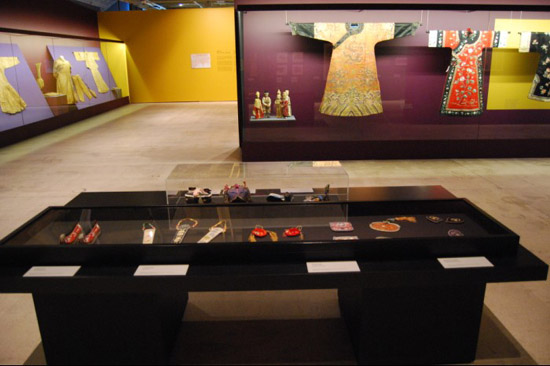
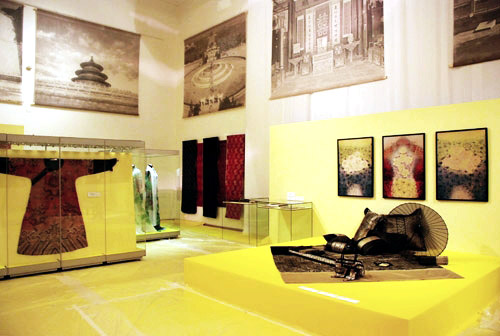
And the Fashion Gallery is divided into three sections: “Honoring Deities and Following Rituals—Brocaded Garments and Embroidered Robes,” “Court Attire and Ceremonial Wear,” and “Everyday
Clothing in China.” It showcases court attire from the Warring States to Qing dynasties—including robes and imperial silk garments—alongside everyday embroidered textiles.
Through silk garments combined with miniature mannequins, illustrations, and symbolic reconstructed scenes, it interprets the functions of silk in ancient society and showcases its role in daily life, combining silk garments with miniature mannequins, illustrations, and symbolic reconstructions to illustrate silk’s role in ancient society.
Best Things to Do at the National Silk Museum of China in Hangzhou
Hands-On Interactive Workshops
Chasing for a truly memorable experience? You can participate in a hands-on silk workshop organized by the China National Silk Museum.
The museum has established interactive exhibitions in the Silk Road Hall, Weaving Hall, and Sericulture Hall. In the children's area of the Silk Road Hall, you and your children can not only doodle but also experience 3D interactive games, immersing yourselves in a journey along the Silk Road as if traveling through time a thousand years ago.
In the Sericulture Hall, you can observe silkworms up close. Alternatively, visit the Weaving Hall to experience the fabric-making process, or try hands-on DIY activities like silk painting, silk tie-dyeing, and learning to make Chinese knots.
These sessions are perfect for all ages, making the China National Silk Museum an outstanding education museum and a family-friendly museum Hangzhou can be proud of.
Savor a Cup of Coffee in the Museum
For any coffee person, at the Xiaofeng Bookstore in the museum, you can savor not only a cup of coffee but also books about Chinese silk culture here.
In addition to purchasing books on the history of Chinese silk, the bookstore also offers silk scarves, postcards, and other souvenirs to commemorate your museum visit.
How to get to the Chinese National Silk Museum
The museum is easily reachable by bus or metro from downtown Hangzhou.
There are several public bus routes that also stop nearby. You can take Bus no. 12, 31, 42, or 87 to reach the museum.
Alternatively, take Metro Line 4 to Fuxing Road Station and transfer to Bus No. 12 to reach the China National Silk Museum.
Plan Your Visit: Essential Travel Tips for Chinese Silk Museum
Luggage Storage
Small items of luggage may be stored at the Silk Road Pavilion. For larger luggage, please proceed to the museum’s visitor center for storage.
Free Guided
You can consider joining a free guided tour in the museum (check the schedule upon arrival) or borrowing an audio guide to gain a deeper understanding of the silk production process and the significance of key craftsmanship.
The free guided tours are available at 10:00 and 14:00. Please plan your visit accordingly if you wish to join.
Bring a jacket
The air conditioning in the China Silk Museum runs quite cool, so please bring an extra jacket when visiting during summer to avoid catching a chill.
Explore Hangzhou with Easy Tour China
The China National Silk Museum in Hangzhou is a cornerstone of the city’s cultural landscape. To fully experience Hangzhou city, just let Easy Tour China help you design the perfect itinerary, combining the history of
Qinghefang Old Street or a visit to the
Longjing Tea Plantation Village. Here are some recommended Hangzhou itineraries.